AI and virtual reality in therapy
How AI and VR move from demonstration to clinical benefit: objective assessment, better rehabilitation quality and faster patient recovery.
Health program manager and biomedical researcher working on neurorehabilitation and the technology that makes recovery measurable.
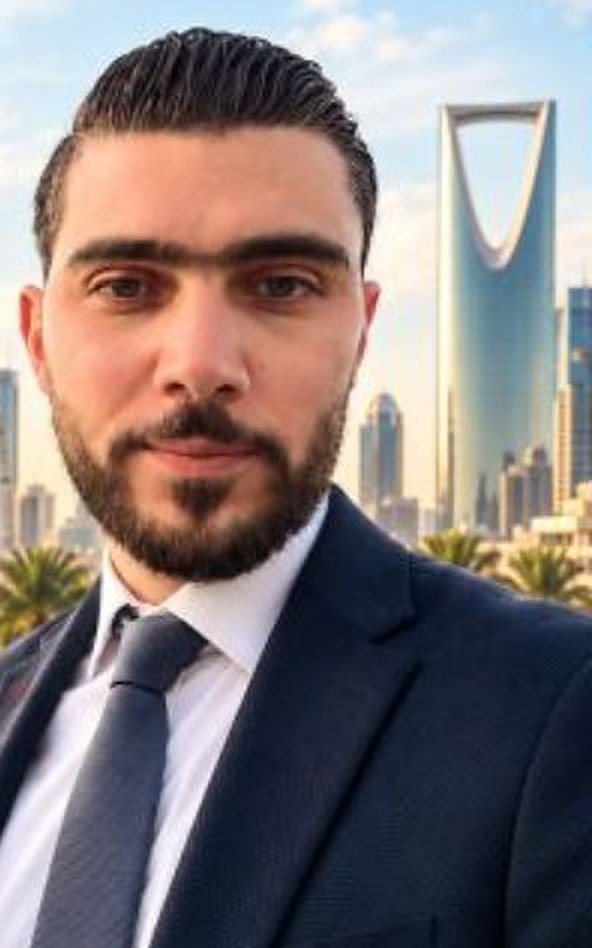 ICDR 2026Scientific speaker
Muhammed Gazal has spent years designing and running health programs in northwest Syria. He now brings that field experience to research on how the brain and body recover.
He has coordinated health and nutrition programs for international organisations, led research and development at the Idlib Health Directorate, and managed teams, budgets and partnerships under difficult conditions.
His work joins program management with data: evaluation methods and analytics that show whether care is actually improving for patients.
His research interest is neurotechnology. He studies wearable sensing, brain-computer interfaces, and the use of AI and virtual reality in rehabilitation, with a focus on tools clinicians can use in daily practice.
“Successful movement does not always mean optimal recovery.”
Compensatory muscle activation can hide behind a movement that looks normal, and is hard to detect by clinical observation alone.
Wearable biosensing and muscle activity analysis, combined with data-driven clinical decision support.
Move from observing a movement to understanding objectively how it is performed.
Pilot study, presented in the scientific session of ICDR 2026 on 10 October 2026.
How AI and VR move from demonstration to clinical benefit: objective assessment, better rehabilitation quality and faster patient recovery.
Following clinical progress in BCIs, including minimally invasive approaches that balance signal accuracy against surgical risk.
Primary health care, nutrition and palliative care programs for communities in Syria, built with local directorates and international partners.
Some newer interfaces reach the brain through the blood vessels and need no open brain surgery. They trade a little signal detail for a much lower surgical risk, and have let people with paralysis write and communicate again using thought alone.
The brain rewires itself at every scale, from single synapses to whole networks. Rehabilitation works by steering that rewiring, which is why measuring what a patient actually does during therapy matters so much.
Research groups have translated brain activity into text and speech with high accuracy for people who lost the ability to speak. It shows how quickly neural decoding is moving from the laboratory towards daily life.
Wireless neural stimulators are being developed to send visual information directly to the brain. The field is early, but it points to implants that are smaller, safer and easier to live with.
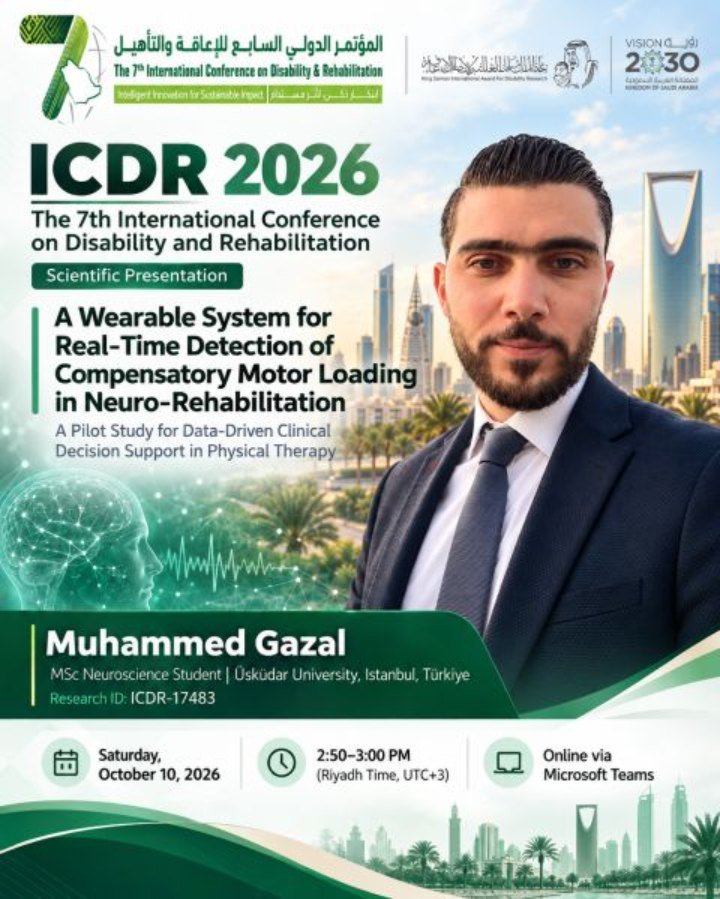
A pilot study for data-driven clinical decision support in physical therapy. Presented at the 7th International Conference on Disability and Rehabilitation, organised by the King Salman Center for Disability Research, Saudi Arabia.
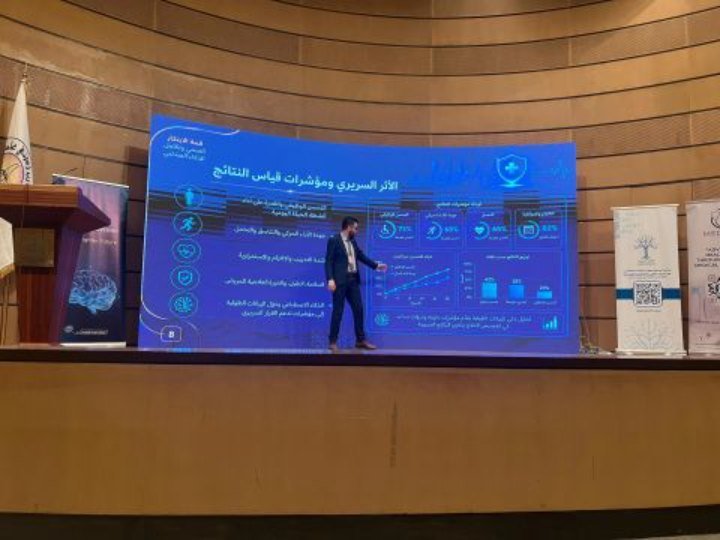
On closing the gap between new technology and real clinical outcomes.
Helped host and facilitate a session led by the Balsam Lebanese Center for Palliative Care.
Üsküdar University, Istanbul, Türkiye
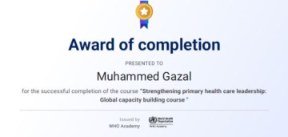
WHO Academy, global capacity building course